Industrial Wastewater & Effluent Treatment Plant
- Home
- Industrial Wastewater & Effluent Treatment Plant
Industrial wastewater treatment is the process of removing contaminants, chemicals, suspended solids, oils, heavy metals, and organic pollutants from wastewater generated by manufacturing and industrial processes. The treated water can be safely discharged, recycled, or reused while complying with environmental regulations.
As industries continue to expand, efficient industrial wastewater treatment has become essential for conserving water resources, protecting the environment, and meeting pollution control standards. Modern treatment systems use physical, chemical, and biological processes to ensure high-quality treated water suitable for various industrial applications. Explore our Industrial Effluent Treatment Plant (ETP), Wastewater Treatment Plant in Mumbai, and Wastewater Treatment Recycling solutions.
Industrial wastewater treatment involves collecting, treating, and purifying wastewater generated during production, cleaning, cooling, and processing operations. Unlike domestic sewage, industrial wastewater often contains complex contaminants that require specialized treatment technologies.
The primary objective is to remove harmful pollutants before the water is discharged or reused, ensuring compliance with environmental norms and promoting sustainable water management.
Industries produce wastewater containing oils, grease, heavy metals, chemicals, dissolved solids, and organic matter. Without proper treatment, these pollutants can contaminate rivers, lakes, groundwater, and soil.
An Industrial Effluent Treatment Plant (ETP) is a specialized system designed to treat wastewater generated by industrial operations before it is discharged or reused. Effluent treatment plants remove physical, chemical, and biological contaminants, ensuring treated water meets environmental discharge standards.
Industrial ETPs play a vital role in preventing water pollution, conserving natural resources, and helping industries comply with CPCB and SPCB pollution control regulations.
Industrial manufacturing processes generate wastewater with varying levels of contamination. Direct discharge of untreated effluent can cause serious environmental damage and legal consequences. Installing an industrial ETP helps industries meet pollution control board norms, prevent water pollution, recycle treated water, lower disposal fees, and support Zero Liquid Discharge (ZLD) initiatives.
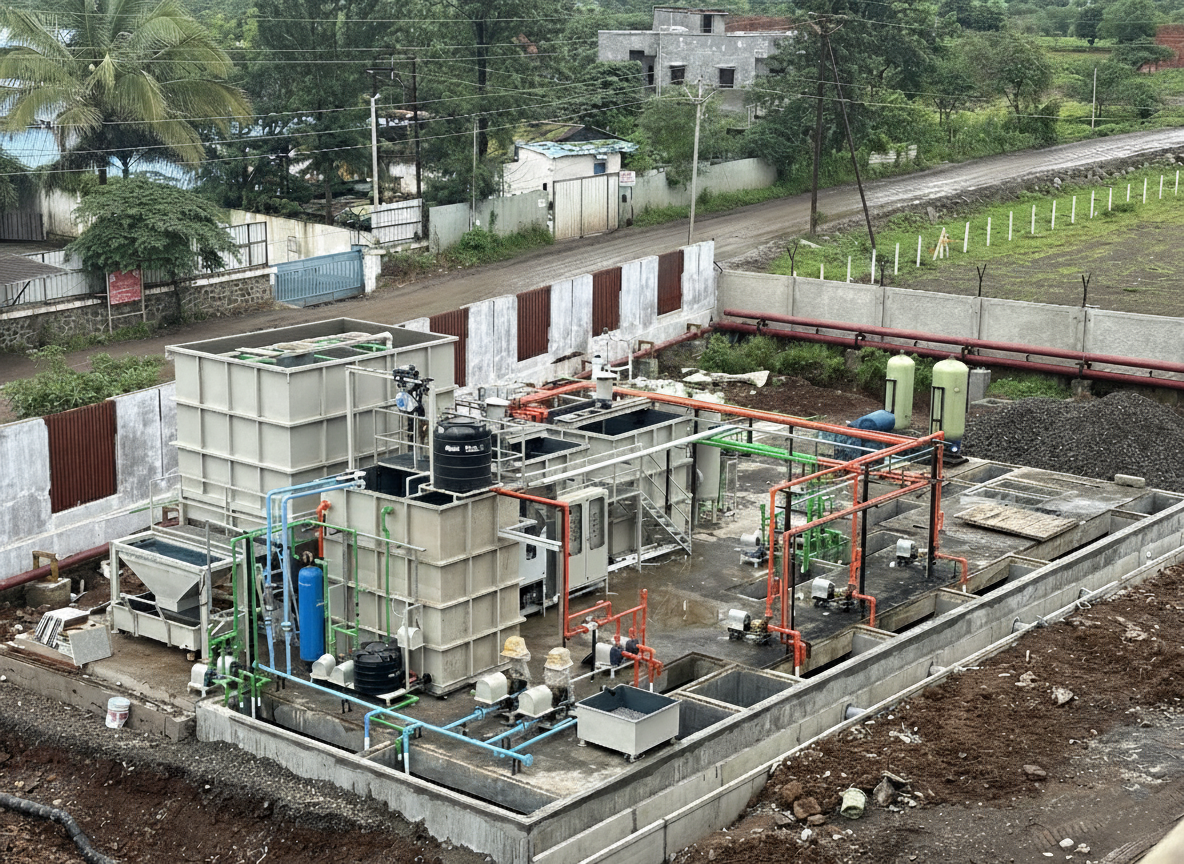
The ETP treatment flow includes Screening, Equalization, Neutralization (pH correction), Coagulation & Flocculation, Primary Clarification, Biological Aeration, Secondary Clarification, Advanced Membrane Filtration (UF/RO), and Sludge Dewatering using filter presses or sludge dryers.
Major ETP components: Bar Screen, Equalization Tank, pH Correction Tank, Dosing System, Primary Clarifier, Aeration Tank, Secondary Clarifier, Sand & Carbon Filters, RO Plant, Sludge Thickener, Filter Press, and PLC Control Panel.
Our Industrial Wastewater & Effluent Treatment Plants serve:
Industrial wastewater treatment is the process of removing contaminants from wastewater generated by manufacturing and industrial operations before it is reused or safely discharged.
It helps industries comply with environmental regulations, reduce pollution, recycle water, lower operating costs, and conserve natural water resources.
Industries such as pharmaceuticals, chemicals, food processing, textiles, engineering, paper mills, steel plants, and automobile manufacturing commonly require industrial wastewater treatment systems.
Common technologies include biological treatment (ASP, MBBR, SBR, MBR), Reverse Osmosis (RO), Ultrafiltration (UF), Pressure Sand Filters, Activated Carbon Filters, chemical treatment, and sludge dewatering systems.
Yes. Treated wastewater can be reused for cooling towers, boiler feed, process water, cleaning, gardening, and other industrial applications, depending on the treatment level.
If you are looking for an efficient Industrial Wastewater Treatment Plant or Effluent Treatment Plant (ETP), Sam Enviro is your trusted partner. Contact Sam Enviro today to discuss your project requirements.