Biological Wastewater Treatment Plant
- Home
- Biological Wastewater Treatment Plant
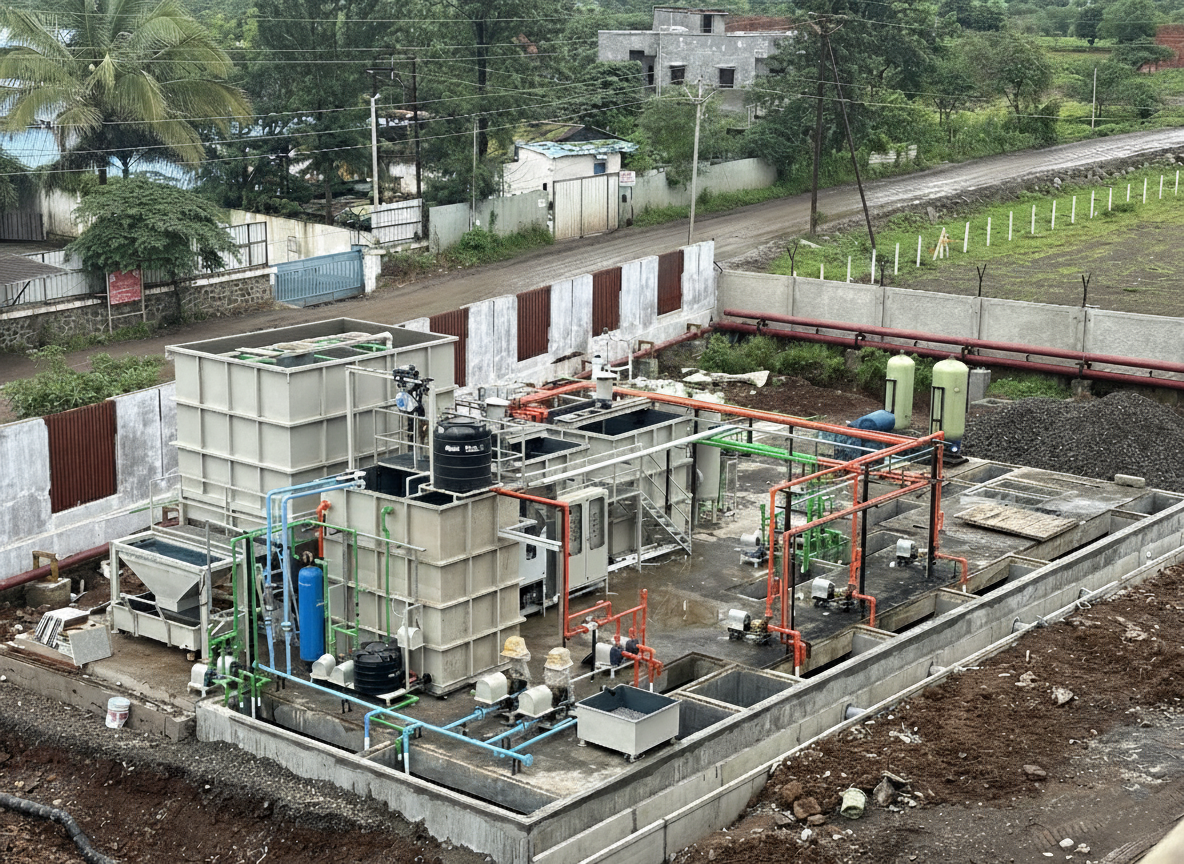
Industrial wastewater contains biodegradable organic matter, suspended solids, nutrients, and other contaminants that must be treated before being discharged or reused. A Biological Wastewater Treatment Plant is one of the most efficient and environmentally friendly solutions for removing organic pollutants using naturally occurring microorganisms. By breaking down biodegradable waste, these treatment systems help industries comply with environmental regulations while promoting water conservation and sustainable operations.
At Sam Enviro, we specialize in designing, manufacturing, supplying, installing, and commissioning advanced Biological Wastewater Treatment Plants for a wide range of industries. Our customized treatment systems are engineered to handle varying wastewater characteristics and flow rates while ensuring consistent treatment efficiency and compliance with CPCB and SPCB discharge standards. You can also explore our Effluent Treatment Plant (ETP), Chemical Treatment of Wastewater, and Wastewater Treatment Plant solutions.
Whether you require a compact Biological Wastewater Treatment System for a small manufacturing unit or a high-capacity industrial treatment plant, our experienced engineers develop tailored solutions based on wastewater analysis, industry requirements, and future expansion plans. With advanced technologies, quality equipment, and dependable after-sales support, Sam Enviro has become a trusted partner for industries seeking reliable wastewater treatment solutions.
A Biological Wastewater Treatment Plant is a wastewater treatment system that uses naturally occurring microorganisms such as bacteria, fungi, and protozoa to decompose organic pollutants present in wastewater. These microorganisms consume biodegradable organic matter as a food source and convert it into harmless by-products such as carbon dioxide, water, and stable biomass.
Unlike chemical treatment, which relies on chemical reactions to remove contaminants, Biological Wastewater Treatment uses biological processes to reduce Biochemical Oxygen Demand (BOD), Chemical Oxygen Demand (COD), and suspended solids. This makes it one of the most sustainable and cost-effective methods for treating industrial and municipal wastewater.
A well-designed Biological Wastewater Treatment Plant improves water quality, reduces pollution, minimizes environmental impact, and enables industries to recycle treated water for various non-potable applications.
Industries generate wastewater containing biodegradable pollutants that can harm rivers, lakes, groundwater, and ecosystems if discharged untreated. Biological treatment helps industries meet environmental standards while improving operational sustainability.
Reduces Organic Pollution
Microorganisms naturally break down organic contaminants, significantly reducing BOD and COD levels before discharge.
Protects the Environment
Proper Biological Treatment of Wastewater minimizes water pollution, protects aquatic life, and supports responsible environmental management.
Supports Water Reuse
Treated wastewater can often be reused for cooling towers, gardening, flushing, and industrial cleaning, reducing dependence on freshwater resources.
Lowers Operating Costs
Compared to many advanced treatment technologies, biological treatment offers economical long-term operation with lower energy and chemical consumption.
Helps Meet Regulatory Standards
A properly designed Biological Wastewater Treatment Plant assists industries in complying with pollution control regulations issued by CPCB and State Pollution Control Boards.
The treatment process combines biological activity with physical separation to efficiently remove biodegradable pollutants from wastewater.
Step 1 – Wastewater Collection and Equalization
Wastewater from different production processes is collected in an equalization tank. This balances fluctuations in flow rate, pollutant concentration, and pH, ensuring stable conditions for biological treatment.
Step 2 – Primary Treatment
Large suspended solids, floating materials, oil, and grease are removed using screening, grit removal, and primary settling tanks. This protects downstream biological processes from excessive loading.
Step 3 – Biological Treatment
This is the core stage of the Biological Wastewater Treatment Plant, where microorganisms consume dissolved and suspended organic matter. Depending on the process selected, oxygen may be supplied through aeration systems, or treatment may occur under oxygen-free conditions. As microorganisms digest pollutants, they convert them into carbon dioxide, water, and biological sludge, significantly reducing BOD and COD levels.
Step 4 – Secondary Clarification
The treated water flows into a secondary clarifier where biological sludge settles at the bottom. A portion of this sludge is returned to maintain microbial activity, while excess sludge is removed for further processing.
Step 5 – Tertiary Treatment (If Required)
Depending on discharge standards or water reuse requirements, treated water may undergo filtration, activated carbon treatment, disinfection, or membrane filtration before final discharge or recycling.
The selection of a Biological Wastewater Treatment System depends on wastewater characteristics, land availability, treatment objectives, and operating conditions. Sam Enviro offers customized solutions using the following technologies.
Aerobic treatment uses oxygen to support the growth of beneficial microorganisms that rapidly break down organic pollutants.
Common Aerobic Technologies:
Advantages: High BOD and COD removal efficiency, faster treatment process, reduced odour generation, stable plant performance. Aerobic systems are commonly used in pharmaceutical, food processing, dairy, textile, and engineering industries.
Anaerobic treatment uses microorganisms that thrive in oxygen-free environments. These microorganisms decompose high-strength organic wastewater while producing biogas that can be used as a renewable energy source.
Common Anaerobic Technologies:
Advantages: Low energy consumption, suitable for high-strength industrial wastewater, biogas generation, reduced sludge production, lower operating costs. Anaerobic treatment is widely used in distilleries, food processing plants, breweries, sugar industries, and chemical manufacturing facilities.
Every wastewater stream is unique. At Sam Enviro, we design each Biological Wastewater Treatment Plant based on detailed engineering analysis to ensure optimum performance and long-term reliability.
Our design considerations include:
A Biological Wastewater Treatment Plant is widely used across industries where wastewater contains biodegradable organic matter:
A Biological Wastewater Treatment Plant uses naturally occurring microorganisms to break down biodegradable organic pollutants in wastewater. It effectively reduces BOD, COD, and suspended solids before the treated water is discharged or reused.
Industries such as pharmaceuticals, food processing, dairy, textiles, chemicals, paper, breweries, distilleries, engineering, hospitals, hotels, and municipal projects commonly use biological wastewater treatment systems.
Aerobic treatment uses oxygen to support microorganisms that decompose organic matter, while anaerobic treatment occurs without oxygen and is suitable for high-strength wastewater. Anaerobic systems also generate biogas, which can be used as an energy source.
Yes. Depending on the treatment process and required water quality, treated wastewater can be reused for cooling towers, gardening, flushing, industrial cleaning, and other non-potable applications.
Sam Enviro provides customized plant design, advanced biological treatment technologies, premium-quality equipment, complete turnkey project execution, installation, commissioning, AMC services, and reliable after-sales support for industries across India.
If you are looking for an efficient and sustainable Biological Wastewater Treatment Plant, Sam Enviro is your trusted partner. Contact Sam Enviro today to discuss your project requirements.